 By Spinoza Havurah
Spinoza HavurahThe Zoom Shul · Weekly
A spiritual humanistic Jewish community
Mazal tov
Our rabbi: semichah for Martin Hasan Di Maggio
Martin Hasan Di Maggio, who has led the Spinoza Havurah for the past four years, has received semichah, rabbinic ordination. He is the first rabbi from the UK to represent Humanistic Judaism. He was ordained by an online Beit Din of three rabbis from the USA and Canada.
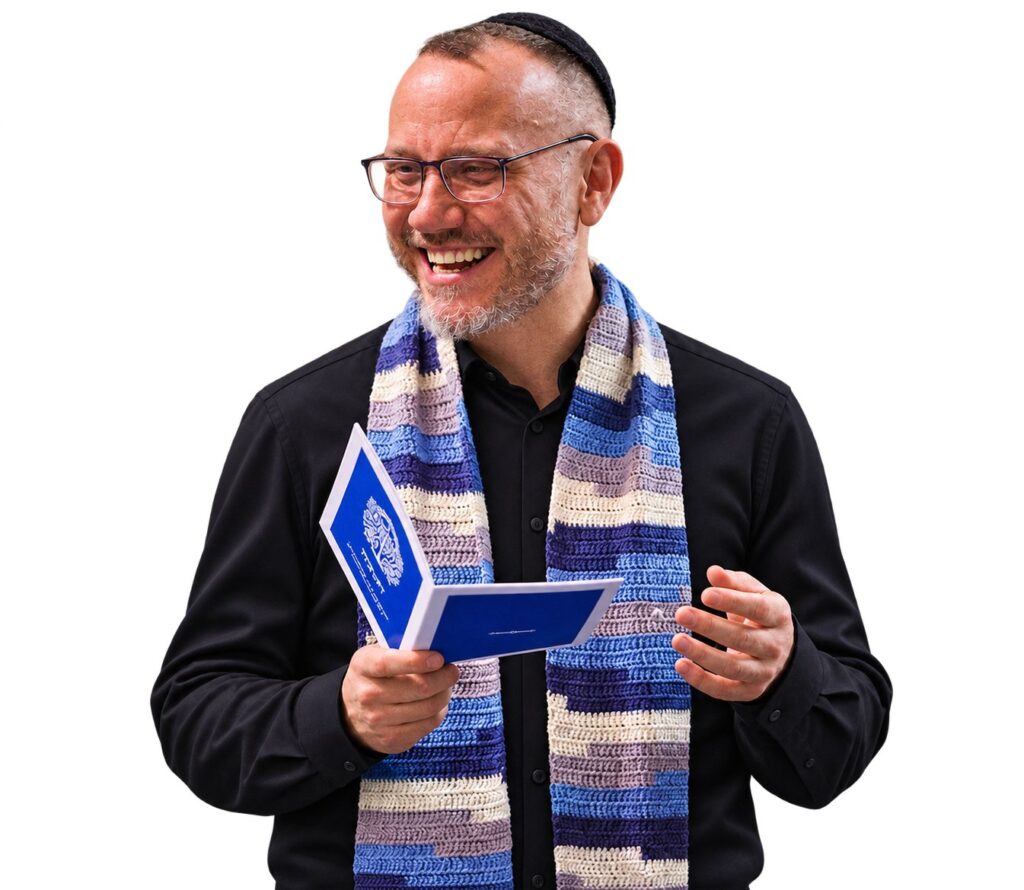
His path to ordination began with the leadership programme of the International Institute for Secular Humanistic Judaism, followed from 2020 by one-to-one learning with Rabbi Dr Tzemah Yoreh in Tanach, liturgy and the practical and communal sides of the rabbinate. His thesis was on Spiritual Humanistic Judaism.
Rabbi Martin describes the role he has taken on as a facilitator rather than an authority: “For me, semichah isn’t about becoming an authority over a community. It’s about being trusted to serve one.” He says the most moving part of the process was reading the references that members of this community wrote about him. Thank you to everyone who wrote one.
The news was reported in The Jewish Chronicle this week, and there is more on the Humanistic Judaism UK news page.
Online installation · Saturday 5 December
We will celebrate with an online installation on Saturday 5 December at 4:00 pm GMT (11:00 am EST), on Zoom. Everyone is welcome — members, friends and family. Register on Zoom, and check your own time with the time zone converter.
A reminder: one middah for Rabbi Martin
In Jewish ethics, middot are the qualities of character we work on throughout our lives, such as patience, kindness, honesty, compassion, humility, humour, courage, generosity and intelligence. We’d be grateful if you would name one quality (middah) you’ve seen in Martin during our time knowing each other and hope he will continue to embody as a rabbi. There’s no right answer, and you’re welcome to express it in your own terms. We would be grateful for a short one-paragraph summary of why you think he embodies that middah and what kind of rabbi you feel he is and hope that he will continue to be.
A rabbi’s validation shouldn’t come only from a Beit Din. It should also come from a community that asks for the rabbi to carry out that role. Your words will be both that recognition and a charge he’ll carry with him.
At his installation, a few people will be invited to read their statement aloud. Please send yours by 1 December 2026.
Thank you for our time together, and for everything you’ve taught us.
spinozahavurah@gmail.comThis week’s reading
וַיִּשְׁלַח · Va-yishláḥ
Genesis 32:4 – 36:43. Twenty years after he ran from home with his brother’s blessing, Ya’akóv is on his way back, and Esáv is coming to meet him with four hundred men. In between the message and the meeting: a night alone by the river Yabbók, a wrestling match until dawn, a limp and a new name. Then the embrace nobody expected — and, after it, the brothers going their separate ways.
This week’s theme sits at the centre of the parasha. Ya’akóv prepares for a war and is met with tears.
The seven aliyot
עֲלִיּוֹת
| # | Opening | What is read | Verses |
|---|---|---|---|
| 1 | וַיִּשְׁלַח יַעֲקֹב מַלְאָכִיםVayishláḥ Ya’akóv mal’achím | Ya’akóv sends messengers ahead to his brother in the land of Se’ír. They come back with news: Esáv is on his way, with four hundred men. Ya’akóv is afraid, splits his camp in two, and prays: “I am too small for all the kindness you have shown me.” | 32:4–13 |
| 2 | וַיָּלֶן שָׁם בַּלַּיְלָה הַהוּאVayálen sham baláyla hahú | He sends gift after gift ahead of him — goats, ewes, camels, cows, donkeys — hoping to soften his brother’s face before he sees it. At night he takes his family across the Yabbók and is left alone. A man wrestles with him until dawn, wrenches his hip — and Ya’akóv will not let him go without a blessing. His name becomes Yisra’él. | 32:14–30 |
| 3 | וַיִּקְרָא יַעֲקֹב שֵׁם הַמָּקוֹםVayikrá Ya’akóv shem hamakóm | He calls the place Peni’él, “for I have seen God face to face”, and limps on into the sunrise. Esáv appears. Ya’akóv bows seven times as he approaches — and Esáv runs to meet him, embraces him, falls on his neck and kisses him, and they weep. | 32:31–33:5 |
| 4 | וַתִּגַּשְׁןָ הַשְּׁפָחוֹתVatigáshna hashefaḥót | The family comes forward and bows. “I have plenty, my brother,” says Esáv; Ya’akóv presses the gift on him: “to see your face is like seeing the face of God.” Esáv offers to travel together; Ya’akóv gently declines. Esáv goes home to Se’ír, and Ya’akóv settles near Shechem. | 33:6–20 |
| 5 | וַתֵּצֵא דִינָה בַּת לֵאָהVatetsé Dina bat Le’á | Dina, daughter of Le’á, goes out and is taken by Shechem son of Ḥamór. Shim’ón and Leví take revenge on the whole town, and Ya’akóv rebukes them. The family goes up to Bet-Él, puts away its foreign gods, and buries Devorá, Rivká’s nurse. The new name is given again, with a blessing. | 34:1–35:11 |
| 6 | וְאֶת הָאָרֶץVe’ét ha’árets | On the road to Efrát, Raḥél dies giving birth to Binyamín and is buried by the wayside. The twelve sons are listed. Yitsḥák dies, old and full of days — and Esáv and Ya’akóv bury him together. Then the generations of Esáv. | 35:12–36:19 |
| 7 | אֵלֶּה בְנֵי שֵׂעִירÉle vené Se’ír | The clans of Se’ír the Ḥorite, the kings who reigned in Edóm before any king reigned in Israel, and the chiefs of Esáv — the brother’s family given its own full place in the story. | 36:20–43 |
Maftir 36:40–43. Transliteration follows the key in Tefiloténu. The Haftará this week is the theme — Va-yishláḥ is not one of the special Shabbatot, so the second reading is the one below. The traditional reading is the book of Ovadyá (Obadiah 1:1–21), a prophecy against Edóm, Esáv’s descendants. For anyone who wants a story to go with the theme, 2 Samuel 14:21–33 tells how King David’s estranged son Avshalóm comes home and, in the end, his father kisses him.
Haftará · this week’s theme
הַפְטָרָה · The second reading
On the special Shabbatot we read the prophets. On every other week the quality set for the year takes the slot — the second reading that answers the first, which is what a Haftará has always been. The blessings before and after are the same either way.
פִּיּוּס
Reconciliation
Piyús
- Jacob prepares to meet Esau with gifts, prayer and fear. How do you prepare for a difficult reunion?
- Esau runs to embrace his brother. What made reconciliation possible after twenty years?
- The brothers part again and live apart. Is reconciliation complete if people go separate ways?
Three ways in, not an agenda — most weeks one of them takes the whole hour, and should.
And one against it
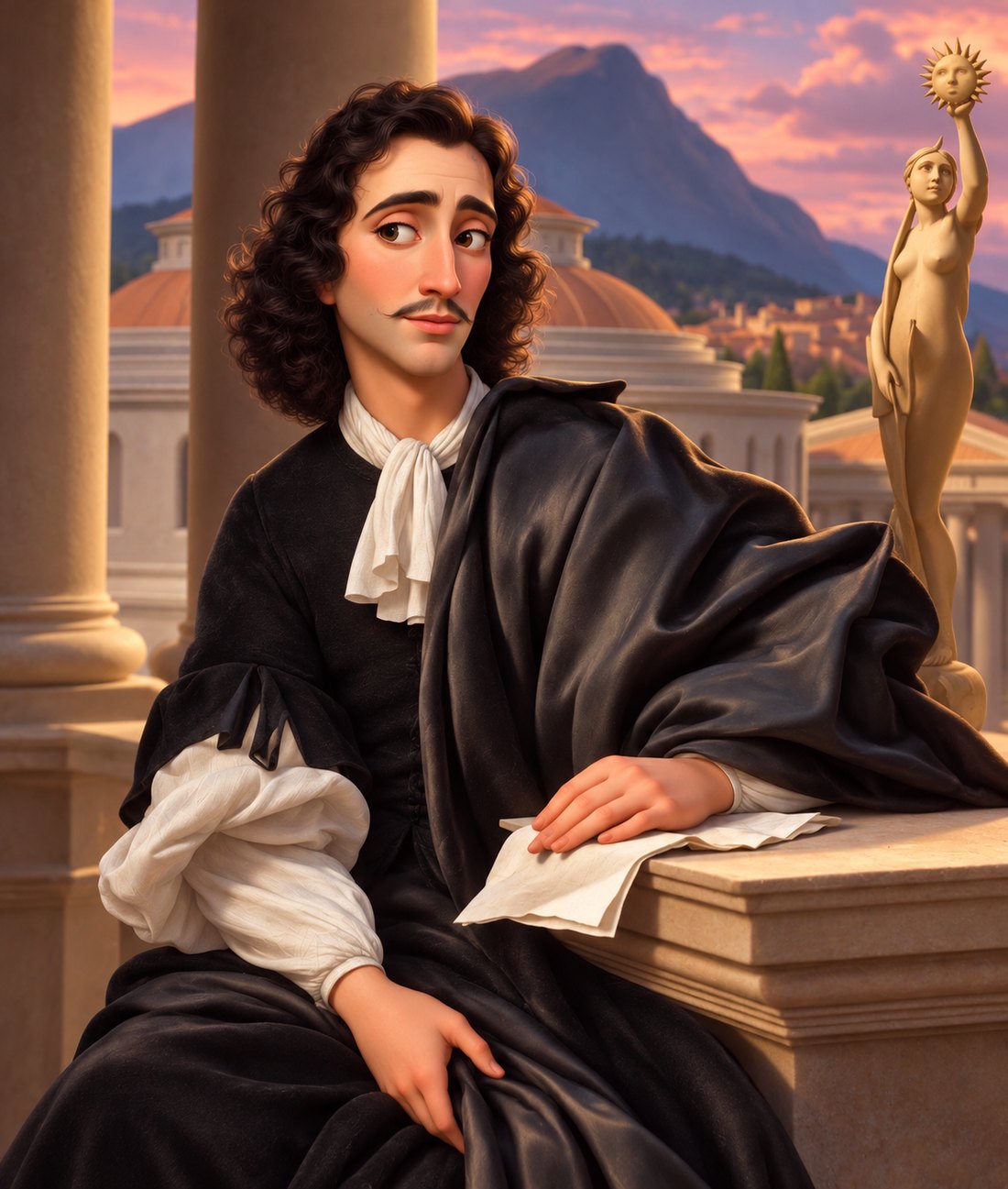
Spinoza on hatred that turns
“Hatred which is completely vanquished by love passes into love; and love is thereupon greater than if hatred had not preceded it.”
Ethics III · Proposition 44
The proposition before it sets the scene: hatred grows when it is returned, and can be destroyed by love. Then Spinoza adds a warning in the note that follows. No one should go looking for a quarrel in order to enjoy the warmer love of making it up, any more than someone would wish to fall ill for the pleasure of getting better. Ya’akóv and Esáv get the embrace, and then live apart — which may be what a real reconciliation looks like. Spinoza never got his: the ḥérem of 1656 was never lifted. Worth putting to the room: is a love that has come through hatred really stronger, or only more aware of what it nearly lost?
Practical tools
Three things to do this week
וַיִּשְׁלַח
Send word aheadVayishláḥ
Think of one relationship that went quiet after a falling-out. This week, send the first message — not the whole conversation, just the opening line.
Ya’akóv does not wait at home for his brother to arrive. He sends word first, without knowing what will come back. The first message is rarely the one that settles anything; it is the one that makes everything else possible.
פָּנִים אֶל פָּנִים
Face to facePaním el paním
If there is something to put right, do it in person, or at least by voice — not in writing. Let them see your face, and look at theirs.
All Ya’akóv’s gifts went ahead of him, and none of them did the work. What changed things was the two brothers seeing each other. “To see your face,” he tells Esáv, “is like seeing the face of God.” A screen can carry an apology; a face shows whether it is meant.
לְדַרְכּוֹ
Each on their own roadLedarkó
Peace does not have to mean closeness. Think of one old conflict where you have been holding out for a perfect ending, and let a good-enough one be enough.
After the embrace, Esáv goes back to Se’ír and Ya’akóv goes on to Sukkót. Years later they stand together at their father’s grave. Reconciliation sometimes looks like distance with the hostility taken out of it — and that is not a failure.
Va-yishláḥ is a story of fear that turned out to be wrong. Ya’akóv spends a night preparing for the worst version of his brother and meets a better one. Most of us are carrying an Esáv of our own imagining; the real one may be kinder.
From the community
Notices
Rabbi Martin’s installation · Saturday 5 December
4:00 pm GMT · 11:00 am EST, on Zoom. Join us to celebrate Rabbi Martin Hasan Di Maggio’s semichah. Register on Zoom.
Haven’t sent your middah for Rabbi Martin yet? Please email it to spinozahavurah@gmail.com by 1 December — details at the top of this newsletter.
Torah study · Sunday 29 November
1:00 pm EST · 6:00 pm in the UK, on Zoom. A pre-Ḥanuká study and discussion led by James M. Branum, on excerpts from the First Book of Maccabees (read it on Sefaria), which tells some — but not all — of the historical and legendary roots of the festival. Register on Zoom.
Your pocket-sized Ḥanuká booklet
Get your pocket-sized Hanukkah booklet in time for Hanukkah — Ḥanuká begins on the evening of Friday 4 December. Order it here: Amazon.com · Amazon UK & Europe · Amazon Brasil
Yahrzeits
We read the names each week. Send us the name, the relationship and the Hebrew or civil date, and we will keep it in the cycle.
spinozahavurah@gmail.comHumanistic Judaism 101
Several of you have asked whether we will run Humanistic Judaism 101 again. If you would like to take it, email us and tell us which time zone you are in — once we know numbers and the times that work, we will announce dates.
spinozahavurah@gmail.comCommunity news
Send us your news or yahrzeits and we’ll add them to next week’s newsletter.
תְּפִלּוֹתֵינוּ · Tefiloténu
Our siddur — the prayerbook of Spiritual Humanistic Judaism, used at every Shabbat service. If you have been following along without a copy, it is available in both marketplaces: Amazon.com · Amazon.co.uk
Spinoza Havurah is free to attend and runs on what its members give.
Donate